


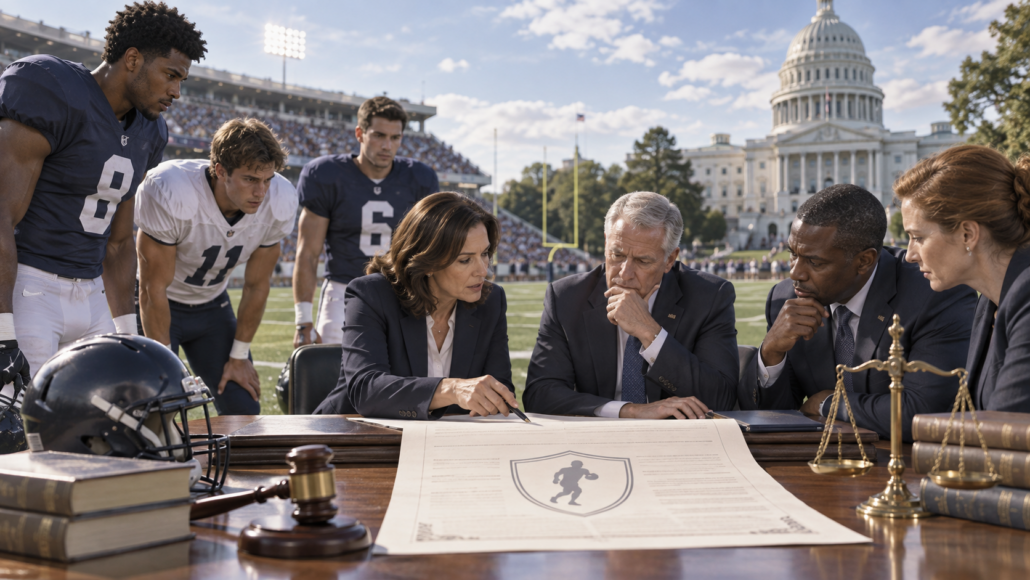
Protect College Sports Act Debate Raises Questions for College Sports Betting
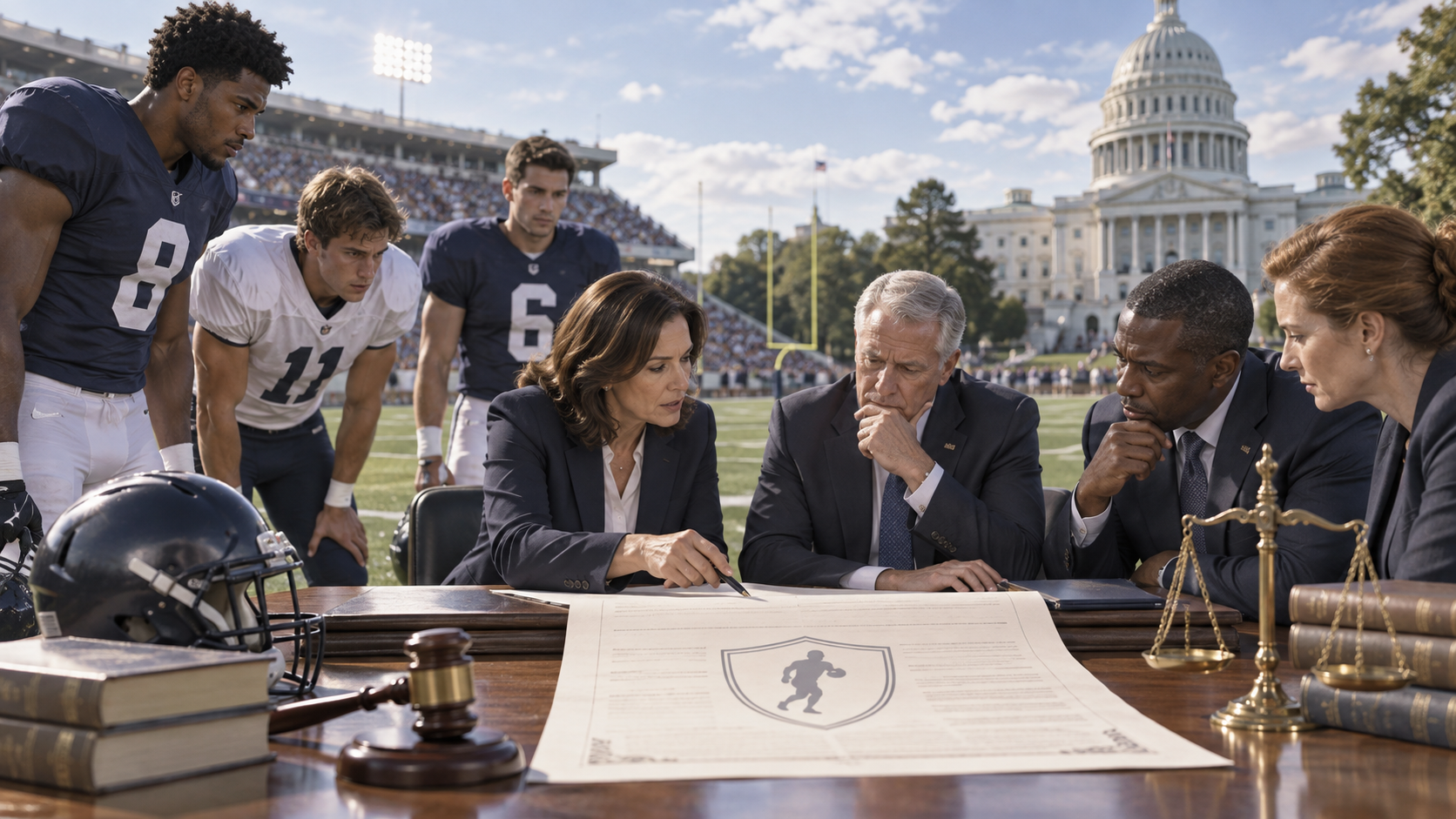
Protect College Sports Act debate is the focus of a new US-facing gaming-news article after Las Vegas Review-Journal — Casinos & Gaming reported “Hill: It’s worth hearing other side of the Protect College Sports Act debate” on September 13, 2026. The development is worth following because it touches Protect College Sports Act and college sports betting rules, but the report should be read as a specific event rather than a promise about what happens next.
What the source reports
Adam Hill Hill: It’s worth hearing other side of the Protect College Sports Act debate There is something unsettling about not hearing dissenting opinions on the current bill being pushed as a fix to curb some of the chaos in college sports. Colorado head coach Deion Sanders walks on the field before an NCAA college football game between Georgia Tech and Colorado, Thursday, Sept. 3, 2026, in Atlanta. (AP Photo/Mike Stewart) More Stories Hill: Raiders’ season has to be about developing more than just a young QB Hill: Even journalism’s much-needed victory comes with a caveat Hill: Raiders must finally see a plan all the way through regardless of 2026 record Hill: NFL players in transfer portal the new normal for college football By Adam Hill / Las Vegas Review-Journal September 12, 2026 – 6:03 pm Updated September 12, 2026 – 6:06 pm Something was very noticeable about Saturday’s appearance of Senator Ted Cruz on ESPN’s “College Gameday” to support the Protect College Sports Act. Beyond the boos and derogatory chants from the Austin, Texas, crowd. It was more about what wasn’t seen. Because despite a wave of criticism for presenting only one side of the argument on the importance of the passing of the bill last week, the sport’s most influential television program did it again. Cruz, one of the bill’s sponsors, espoused the virtues of the legislation largely unchecked on a show that has been unequivocal in its support. At least w
Why this development matters
Summarize the reported debate and distinguish commentary about proposed federal policy from enacted law or a final regulator decision. That distinction is important for readers comparing operators, products, regulators, and markets. A headline can identify a meaningful announcement while leaving open questions about execution, timing, customer response, or the legal framework that applies to a particular activity.
The immediate facts are narrower than the broader debate. The source describes one reported development, and the available information does not establish a nationwide outcome, a typical customer experience, or a guaranteed commercial result. Readers should separate what was announced or observed from what may be inferred. That is especially relevant when coverage involves Protect College Sports Act, college sports betting rules, NCAA wagering policy.
Questions to watch
The next useful evidence will come from primary records, later company updates, and the relevant state or federal authority. Follow-up reporting may clarify whether the activity expands, changes, faces a challenge, or remains limited to the circumstances described in the source. Until that evidence is available, it is more accurate to describe this as a current development than as proof of a lasting market shift.
For additional context, readers can review Congress.gov, NCAA resources, National Council on Problem Gambling, American Gaming Association. Those resources help distinguish industry commentary from official rules, consumer guidance, or regulatory information. They should be used alongside the source article rather than treated as substitutes for the source’s specific reporting.
How to read the headline responsibly
News about casinos, sports wagering, and prediction markets can move quickly, and terminology is not always interchangeable. Availability, licensing, contract terms, state boundaries, and responsible-gambling protections can differ by product and jurisdiction. Before acting on any offer or wagering information, check the applicable operator terms and current local guidance. Never treat a news report, market projection, promotional claim, or unusual jackpot as evidence of likely personal profit.
Responsible gambling note: Readers who choose to gamble should set a budget before play, take breaks, and use deposit, spending, or self-exclusion tools when needed. The National Council on Problem Gambling provides confidential help and education resources. Gambling should be treated as entertainment, not as a way to pay bills or recover losses.
For related coverage on this site, see Long Island Casino Rezoning: Challenge Dismissal Keeps Dispute in View and Long Island Casino Rezoning: Challenge Dismissal Keeps Dispute in View. The original report is available from the source publisher. This article is an original summary and context piece based on that report and does not add facts beyond the cited material.
For related coverage on this site, see [object Object] and [object Object].