



Posts

Editorial illustration of DraftKings sports betting technology, a patent dispute, court documents, and digital wagering

DraftKings Patent Challenge Brings Sports Betting Technology Dispute Into View

DraftKings Patent Challenge Brings Sports Betting Technology Dispute Into View

DraftKings patent challenge is at the center of this U.S. gaming-news briefing after DraftKings Seeks Invalidation of Patent Invented by Commerce Secretary Howard Lutnick was reported by Casino.org News on September 20, 2026. This original summary keeps the source visible while adding context for readers following casino, gambling, sports-wagering, and gaming-technology markets.

What the report says

News Legal Legal DraftKings Seeks Invalidation of Patent Invented by Commerce Secretary Howard Lutnick Posted on : September 20, 2026, 04:36h. Last updated on : September 21, 2026, 03:32h. Written by Todd Shriber Todd Shriber is a senior news reporter covering gaming financials, casino business, stocks, and mergers and acquisitions for Casino.org. Todd got his start in financial markets as a reporter with Bloomberg News… Click for more Key Points The gaming company is asking the U.S. Patent Office to invalidate a geolocation patent invented by former Cantor Fitzgerald CEO and current Commerce Secretary Howard Lutnick The investment firm accused DraftKings of copying the patent DraftKings says a patent examiner didn’t apply “prior art” during prosecution of the case, thus rendering claims unpatentable Share DraftKings is requesting that a panel of the U.S. Patent and Trademark Office (USPTO) nullify a patent that trading house Cantor Fitzgerald says the gaming company copied for its benefit. U.S. Commerce Secretary Howard Lutnick. DraftKings is asking a patent board to invalidate some sports betting patents created by Lutnick’s former firm, Cantor Fitzgerald. (Image: Cantor Fitzge

The cited report describes a specific development rather than a complete picture of the national market. A technology announcement, revenue release, conference agenda, legal dispute, referendum campaign, venue opening, or jackpot report can matter while leaving important questions open. Readers should separate confirmed details from interpretation, estimates, allegations, forecasts, and future possibilities.

Why DraftKings patent challenge matters

Describe the patent challenge as litigation or a legal position, not a final court ruling, finding of infringement, or prediction about the company’s business.

The wider context includes DraftKings patent challenge, sports betting technology patent, gaming legal dispute. These phrases frame the topic, but they do not add facts that the source did not establish. U.S. casino and gambling markets are shaped by state law, tribal sovereignty, licensing conditions, tax rules, technology, advertising standards, court decisions, and consumer-protection expectations.

That state-by-state structure is important. A development in one jurisdiction, a federal court case, a company announcement, or a market estimate does not automatically change the rules or customer experience everywhere else. The relevant jurisdiction, agency, court, company, organization, or operator should be identified before a broad conclusion is drawn.

What operators, regulators, and consumers should watch

Operators will read this news through product design, compliance, workforce decisions, customer experience, and long-term positioning. Regulators will focus on authority, disclosure, the public record, and whether appropriate protections are in place. Consumers should ask practical questions: which product, event, property, or proposal is involved, what terms apply, which jurisdiction is relevant, and whether the story changes anything they can legally do today.

The next useful evidence may come from official notices, court records, company filings, audited results, implementation dates, event details, or later reporting. Follow-up information can clarify whether a proposal advances, a technology reaches more properties, a preview becomes an event, a forecast changes, or a dispute produces a formal decision. Until then, it is more accurate to call this a current development than proof of a lasting market shift.

Related reading and official context

Readers can compare the original report with U.S. Patent and Trademark Office and U.S. Securities and Exchange Commission. Related coverage on this site includes Matthew Livelsbergers Manifesto: Unveiling the Betting Strategies Behind Major Predictions, Casino Bill Validator Technology Set for G2E 2026 Debut, Casino Bill Validator Technology Set for G2E 2026 Debut. These links provide context and primary information, not endorsements of an operator, promotion, investment, event, or wager.

FAQ

Does this update change gambling rules everywhere in the United States?

No. Casino, lottery, sports-betting, and prediction-market rules remain shaped by state law, tribal compacts, licensing conditions, court decisions, and regulator guidance. A development in one jurisdiction or company does not automatically apply nationwide.

What should readers verify before acting on this news?

Check the original source, publication date, relevant regulator or organization, current terms, and whether the information is a proposal, estimate, allegation, preview, report, or completed action. For legal, tax, or financial questions, use current official materials and qualified professional advice.

How can gambling stay recreational?

Set a budget and time limit before play, avoid chasing losses, take breaks, and treat gambling as entertainment rather than income. If it stops feeling manageable, contact a qualified gambling-support service.

Responsible gambling: Gambling involves risk and is not a guaranteed way to make money. Only participate where legal, use funds you can afford to lose, set limits in advance, avoid chasing losses, and seek qualified support if gambling affects your finances, relationships, or wellbeing. The National Council on Problem Gambling provides confidential information and support.

Original source: DraftKings Seeks Invalidation of Patent Invented by Commerce Secretary Howard Lutnick from Casino.org News. This is an original summary and context piece based on that report.
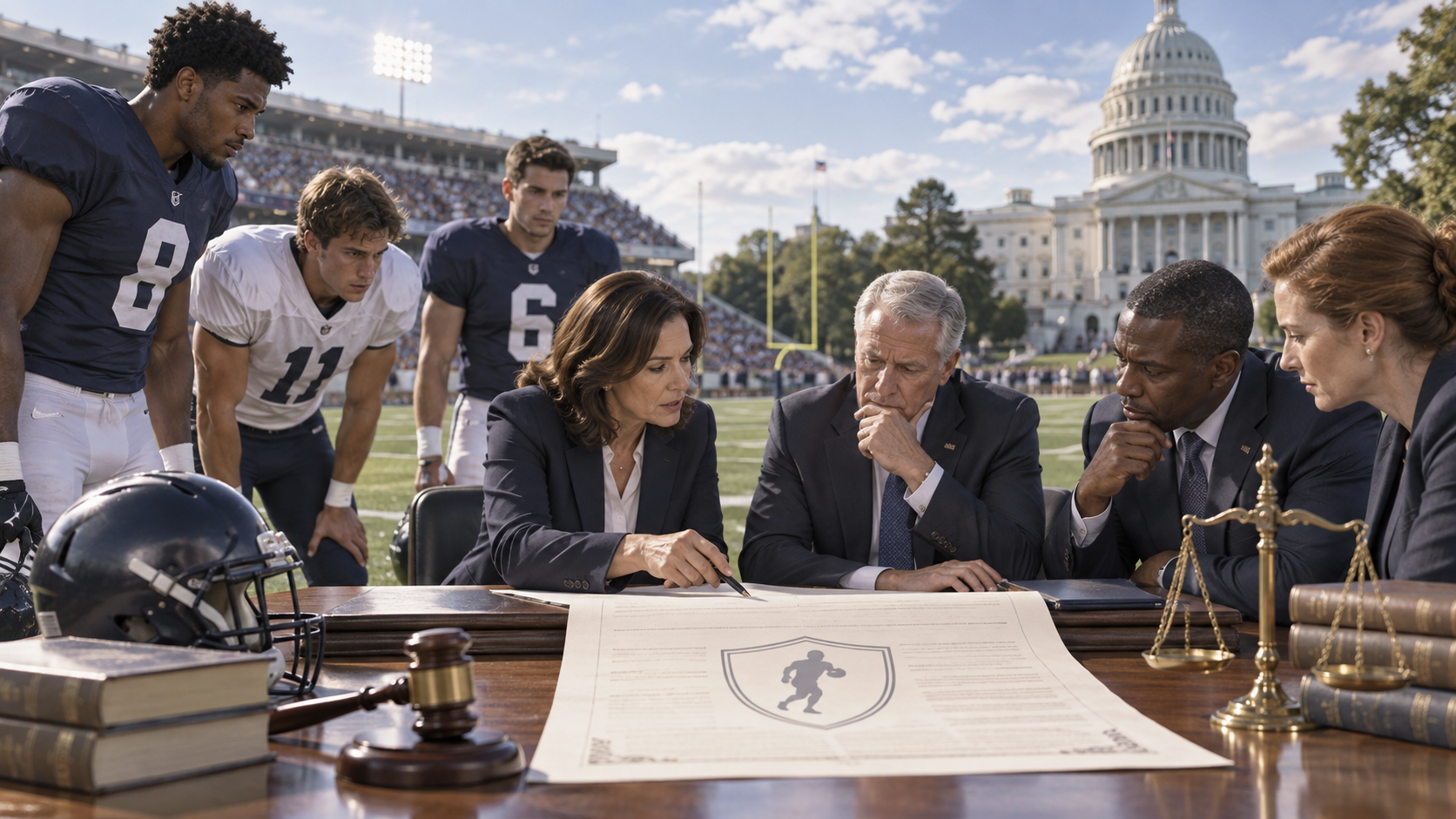
Editorial illustration of college sports policy, a congressional debate, and betting oversight

Protect College Sports Act Debate Raises Questions for College Sports Betting

Editorial illustration of college sports policy, a congressional debate, and betting oversight

Protect College Sports Act debate is the focus of a new US-facing gaming-news article after Las Vegas Review-Journal — Casinos & Gaming reported “Hill: It’s worth hearing other side of the Protect College Sports Act debate” on September 13, 2026. The development is worth following because it touches Protect College Sports Act and college sports betting rules, but the report should be read as a specific event rather than a promise about what happens next.

What the source reports

Adam Hill Hill: It’s worth hearing other side of the Protect College Sports Act debate There is something unsettling about not hearing dissenting opinions on the current bill being pushed as a fix to curb some of the chaos in college sports. Colorado head coach Deion Sanders walks on the field before an NCAA college football game between Georgia Tech and Colorado, Thursday, Sept. 3, 2026, in Atlanta. (AP Photo/Mike Stewart) More Stories Hill: Raiders’ season has to be about developing more than just a young QB Hill: Even journalism’s much-needed victory comes with a caveat Hill: Raiders must finally see a plan all the way through regardless of 2026 record Hill: NFL players in transfer portal the new normal for college football By Adam Hill / Las Vegas Review-Journal September 12, 2026 – 6:03 pm Updated September 12, 2026 – 6:06 pm Something was very noticeable about Saturday’s appearance of Senator Ted Cruz on ESPN’s “College Gameday” to support the Protect College Sports Act. Beyond the boos and derogatory chants from the Austin, Texas, crowd. It was more about what wasn’t seen. Because despite a wave of criticism for presenting only one side of the argument on the importance of the passing of the bill last week, the sport’s most influential television program did it again. Cruz, one of the bill’s sponsors, espoused the virtues of the legislation largely unchecked on a show that has been unequivocal in its support. At least w

Why this development matters

Summarize the reported debate and distinguish commentary about proposed federal policy from enacted law or a final regulator decision. That distinction is important for readers comparing operators, products, regulators, and markets. A headline can identify a meaningful announcement while leaving open questions about execution, timing, customer response, or the legal framework that applies to a particular activity.

The immediate facts are narrower than the broader debate. The source describes one reported development, and the available information does not establish a nationwide outcome, a typical customer experience, or a guaranteed commercial result. Readers should separate what was announced or observed from what may be inferred. That is especially relevant when coverage involves Protect College Sports Act, college sports betting rules, NCAA wagering policy.

Questions to watch

The next useful evidence will come from primary records, later company updates, and the relevant state or federal authority. Follow-up reporting may clarify whether the activity expands, changes, faces a challenge, or remains limited to the circumstances described in the source. Until that evidence is available, it is more accurate to describe this as a current development than as proof of a lasting market shift.

For additional context, readers can review Congress.gov, NCAA resources, National Council on Problem Gambling, American Gaming Association. Those resources help distinguish industry commentary from official rules, consumer guidance, or regulatory information. They should be used alongside the source article rather than treated as substitutes for the source’s specific reporting.

How to read the headline responsibly

News about casinos, sports wagering, and prediction markets can move quickly, and terminology is not always interchangeable. Availability, licensing, contract terms, state boundaries, and responsible-gambling protections can differ by product and jurisdiction. Before acting on any offer or wagering information, check the applicable operator terms and current local guidance. Never treat a news report, market projection, promotional claim, or unusual jackpot as evidence of likely personal profit.

Responsible gambling note: Readers who choose to gamble should set a budget before play, take breaks, and use deposit, spending, or self-exclusion tools when needed. The National Council on Problem Gambling provides confidential help and education resources. Gambling should be treated as entertainment, not as a way to pay bills or recover losses.

For related coverage on this site, see Long Island Casino Rezoning: Challenge Dismissal Keeps Dispute in View and Long Island Casino Rezoning: Challenge Dismissal Keeps Dispute in View. The original report is available from the source publisher. This article is an original summary and context piece based on that report and does not add facts beyond the cited material.

For related coverage on this site, see [object Object] and [object Object].

Maryland sports wagering sends $8.4 million to state in July

Maryland sports wagering sends $8.4 million to state in July

Maryland sports wagering generated $8.4 million in state contributions during July 2026, according to the Maryland Lottery and Gaming Control Agency’s monthly report.

This USA casino-news briefing separates reported facts from context, uncertainty and practical questions. The primary keyword is used for search clarity, while the story remains focused on what the source actually establishes.

Maryland gaming regulator office with blurred sports-wagering charts

Key points

  • The agency reported $8,452,763 in contributions to Maryland during July 2026, the first month of fiscal year 2027. The amount was up 16.6% from $7,252,318 in July 2025.
  • Sports bettors in Maryland wagered $496,407,335 during July 2026, according to the official release. A handle figure measures the amount wagered, not operator profit or the amount returned to bettors.
  • The report is a state-market update. It does not indicate that a particular customer, team or sportsbook is more likely to win, and monthly totals can move with the sports calendar and operating conditions.

What the source reports

The agency reported $8,452,763 in contributions to Maryland during July 2026, the first month of fiscal year 2027. The amount was up 16.6% from $7,252,318 in July 2025.

Sports bettors in Maryland wagered $496,407,335 during July 2026, according to the official release. A handle figure measures the amount wagered, not operator profit or the amount returned to bettors.

The report is a state-market update. It does not indicate that a particular customer, team or sportsbook is more likely to win, and monthly totals can move with the sports calendar and operating conditions.

Why the update matters

Maryland sports wagering data is best read as a public-policy and market-health snapshot. Contributions show what the state received under its tax and regulatory structure, while handle shows activity before considering payouts, promotional credits and other accounting details. DraftKings Online Sports Betting Growth Drives $206 Million in Stock Sales

The year-over-year comparison is useful because it puts July’s result in context, but one month is not a trend by itself. Readers should compare later releases using the same definitions and check whether the mix of mobile and retail wagering changes. AGEM Index rises 9.8% in July as gaming-equipment shares gain

Consumer activity should remain separate from market statistics. A rising handle does not make a bet safer or more profitable. Set a fixed budget, avoid chasing losses and use only legal, regulated options where permitted. World Cup sports betting growth brought more US bettors and first-time depositors

Readers should keep the jurisdiction, date and source in view. Casino and betting stories often combine a confirmed announcement with a wider question about business, regulation, technology, communities or consumers. That context can be useful, but it should remain clearly separated from facts attributed to the original report.

Official releases, filings and regulator pages may add detail or change the picture later. A careful reader should use those primary resources to check current status, terms, eligibility, schedules and legal conditions rather than treating a single news story as a complete forecast. This approach keeps the article useful without overstating what the source proves.

That distinction is especially important when a report involves money, safety, health, public policy or a changing commercial offer. The source link gives readers a way to review the original account, while the supporting links point toward agencies, filings and official organizations that can confirm the next development.

News value also depends on time. A market figure, appointment, opening plan or event schedule can be updated after publication, so the article records the verified position at the run date and points readers toward sources that can confirm later changes. That keeps a daily briefing useful without pretending that a live industry stands still.

What to watch next

The agency’s next monthly release should show whether July’s contribution and handle levels continue into the fiscal year.

Readers should use the Maryland regulator for current operator lists, tax details and responsible-gaming resources.

Frequently asked questions

What is the reported development?

Maryland reported $8,452,763 in sports-wagering contributions for July 2026.

Why does it matter?

The reported July handle was $496,407,335.

What should readers remember?

Handle and state contributions are market statistics, not a prediction about an individual wager.

Responsible gambling note

Gambling involves risk and is not a way to make guaranteed income. Only gamble where legal, use money you can afford to lose, set time and spending limits, avoid chasing losses and seek qualified support if gambling affects your finances, relationships or wellbeing.

Original source: Sports Wagering Contributes $8.4 Million to the State During July ’26 from Maryland Lottery and Gaming Control Agency. Authoritative supporting information: Maryland Lottery and Gaming Control Agency and Maryland.gov.